Australian native tree ID guide. The dozen species you'll meet in a backyard.
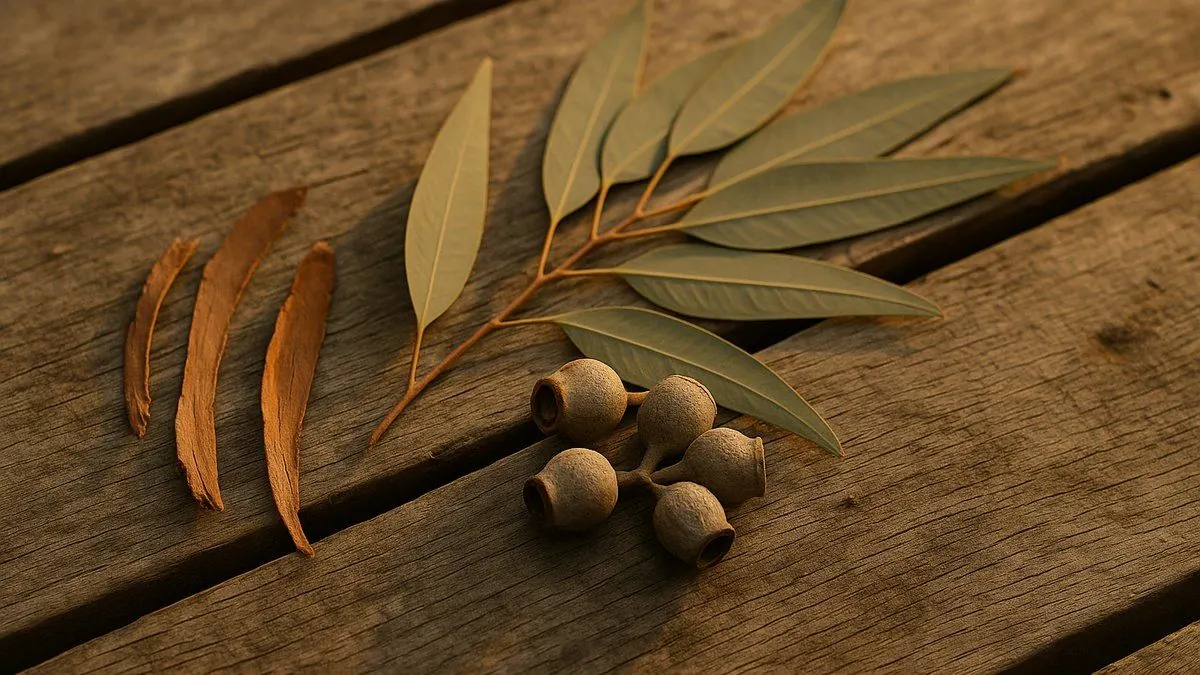
Most homeowners can't name the tree they're calling about. That's fine — we don't expect you to. But if you can ID even roughly, the quote conversation goes faster and the council check is more accurate. Here's the dozen most-asked-about Australian residential species.
Eucalyptus / gums
River red gum
Eucalyptus camaldulensis
- Mature height
- 20–35 m
- Bark
- Smooth, mottled grey-pink, sheds in patches
- Leaves
- Long lance-shaped, 8–25cm
- Range
- Inland Australia, river floodplains; widely planted
- Common problems
- Spontaneous limb drop in summer ("widow-maker"), root invasion
- Removal complexity
- High — heavy, dense hardwood, often huge canopy
- Permit
- Almost always — heritage status common
Lemon-scented gum
Corymbia citriodora
- Mature height
- 25–40 m
- Bark
- Smooth, white-cream, sheds annually
- Leaves
- Smell like lemon when crushed
- Range
- QLD origin, widely planted as street tree
- Common problems
- Tall and slender — wind damage in storms
- Removal complexity
- High — height, plus often near houses
- Permit
- Yes if mature, varies by LGA
Spotted gum
Corymbia maculata
- Mature height
- 25–35 m
- Bark
- Smooth, mottled grey patches
- Leaves
- Glossy lance-shaped, 8–18cm
- Range
- NSW, QLD coast
- Common problems
- Limb drop in heat; canopy dominance shades garden
- Removal complexity
- High — dense hardwood
- Permit
- Yes if ≥800mm circumference
Sydney red gum / smooth-barked apple
Angophora costata
- Mature height
- 15–25 m
- Bark
- Smooth, salmon-pink to grey
- Leaves
- Lance-shaped, opposite (not alternate like eucs)
- Range
- Sydney sandstone country
- Common problems
- Brittle limbs, summer drop
- Removal complexity
- Medium-high
- Permit
- Almost always in NSW LGAs
SA blue gum
Eucalyptus leucoxylon
- Mature height
- 15–25 m
- Bark
- Smooth white-grey, retained ribbons at base
- Leaves
- Lance-shaped, blue-grey tinge
- Range
- SA, VIC; common Adelaide street tree
- Common problems
- Limb drop, root flare burial
- Removal complexity
- Medium-high
- Permit
- Yes if ≥2m circumference (SA Regulated)
Snow gum
Eucalyptus pauciflora
- Mature height
- 10–20 m
- Bark
- Smooth, white-cream, often with green-yellow streaks
- Leaves
- Curved lance-shaped
- Range
- Alpine NSW, VIC, ACT
- Common problems
- Stress at low altitude, bark splits
- Removal complexity
- Medium
- Permit
- Yes in ACT if regulated thresholds met
Other common natives & naturalised species
Jacaranda
Jacaranda mimosifolia
- Mature height
- 10–15 m
- Origin
- South America (naturalised, planted everywhere)
- Identifier
- Purple bell-flowers October–November; fern-like leaves
- Common problems
- Brittle limbs in storms, root spread, leaf litter
- Removal complexity
- Medium
- Permit
- Sometimes — heritage suburbs in Brisbane, Sydney
Moreton Bay fig
Ficus macrophylla
- Mature height
- 30–50 m
- Identifier
- Massive buttress roots, dark green oval leaves, aerial roots
- Range
- QLD, NSW coast; landmark trees in inner Sydney parks
- Common problems
- Roots crack pavers, sewers, foundations within 15m
- Removal complexity
- Very high — usually crane work, often heritage-listed
- Permit
- Always
Norfolk Island pine
Araucaria heterophylla
- Mature height
- 30–60 m
- Identifier
- Pyramid shape, horizontal whorled branches, dense needle foliage
- Range
- Coastal — landmark species on Gold Coast, NSW north coast
- Common problems
- Iconic but limb drop in cyclone winds
- Removal complexity
- Very high — height + heritage status
- Permit
- Almost always for mature specimens
Bangalow palm
Archontophoenix cunninghamiana
- Mature height
- 15–20 m
- Identifier
- Native palm, smooth ringed trunk, large arching pinnate fronds
- Range
- NSW, QLD coast
- Common problems
- Frond cleanup, often planted in clusters
- Removal complexity
- Low-medium
- Permit
- Sometimes; check VMA in QLD
Cocos palm
Syagrus romanzoffiana
- Mature height
- 10–15 m
- Identifier
- Single smooth trunk, drooping pinnate fronds, orange-red fruit
- Range
- Brazilian origin, planted everywhere; declared environmental weed in QLD
- Common problems
- Frond drop, flying-fox magnet, weed status
- Removal complexity
- Low-medium
- Permit
- Usually exempt — encouraged for removal
Paperbark
Melaleuca quinquenervia
- Mature height
- 8–25 m
- Identifier
- White papery bark in layers, cream bottlebrush flowers
- Range
- QLD, NSW coast wetlands
- Common problems
- Coppicing regrowth after damage
- Removal complexity
- Medium
- Permit
- Yes in coastal protection zones
Quick ID by leaf and bark
| Leaf shape | Bark | Likely species |
|---|---|---|
| Long lance, alternate | Smooth, sheds in patches | Eucalyptus species |
| Long lance, opposite pairs | Smooth, salmon-pink | Angophora (Sydney red gum) |
| Pinnate fronds, fan-shaped | Smooth ringed trunk | Palm |
| Pinnate compound, fern-like | Grey, smooth-grooved | Jacaranda |
| Large oval glossy | Grey-brown with aerial roots | Fig |
| Soft needles in whorls | Brown, exfoliating | Pine (Norfolk, Bunya) |
| Long narrow with bottlebrush flowers | White papery layers | Paperbark / Melaleuca |
Crush a leaf and smell it. Strong eucalypt smell = a gum. Lemon = lemon-scented gum. Pine resin = pine. No smell = probably not a eucalypt.
Why species matters for the quote
Two reasons:
- Cutting time and equipment — hardwood gums take longer than softwood pines. The species multiplier built into the calculator reflects this.
- Council protection status — many natives (gums, figs) are blanket-protected in heritage and Significant Tree areas. Exotics (jacaranda, plane, liquidambar) often aren't.
Frequently asked
How can I tell a eucalyptus from a corymbia?
Both are gums. Corymbia (lemon-scented, spotted, bloodwood) generally has rougher bark and woody seed capsules; eucalyptus species are more variable. For most purposes — including permits — they're treated the same.
Are all native trees protected?
No — protection is by size, location, and species. A 3m bottlebrush in your backyard is generally unrestricted; a 20m river red gum on the same block almost always isn't.
What about declared weeds?
Cocos palms (QLD), camphor laurels (NSW), olives (SA), willows (most of southern Australia) are declared environmental weeds. Removal is usually exempt from permit and sometimes encouraged.
How do I find out exactly what species I have?
iNaturalist app for a fast crowd-sourced ID. Or send a photo to us at contact@loraxtreeremoval.com.au and we'll usually nail it within an hour. We do this constantly.
Photo of the tree, address, we'll do the rest
0402 522 434SMS us a photo. We'll ID it, check protection status, quote the work.